True Financial

  • Home
  • My Prosperity Login
  • About
    • John Duncan – Fee Only financial planner
    • Fee for Service Financial Planning
    • Our Ideal Client
  • Advice
    • Benefits of Financial Planning
    • Cash Flow Management
    • Superannuation
      • What is Superannuation
      • What is a SMSF
      • Contributions Limits
    • Investments
      • Investment Philosophy
    • Insurance Advice
      • Insure The Stay-at-Home Parent
      • Income Protection Insurance
    • Retirement Planning
    • Estate Planning Advice
    • Business Advice
  • Articles
  • Video Library
  • Testimonials
You are here: Home / Archives for Uncategorized

April 20, 2018 by John Duncan

2018 March Quarter Review

Economic Overview

Global economic data remained encouraging during Q1, though after a long period of relative calm and upward movement volatility again reared its head in equity markets. While towards the end of the quarter the potential for trade wars heated up.

In the US, economic data continued to be supportive. US business confidence reached a multi-decade high in March. GDP for Q4 2017 was revised upwards to show growth of 2.9%, and while industrial activity slowed – as measured by the ISM manufacturing index – it continued to indicate expansion.

The US Federal Reserve raised rates by 25 basis points in March, from 1.5% to 1.75%. It did not, however, alter its overall rate projection of three hikes for 2018. This announcement quelled some concerns, but escalating US-China trade sanctions precipitated a renewed bout of turbulence in March.

In the eurozone, GDP growth for Q4 2017 was confirmed at 0.6% quarter-on-quarter and unemployment stable at 8.6% in January 2018. However, forward-looking surveys painted a picture of slower growth. The composite purchasing managers’ index (PMI) hit a 14-month low in March and annual inflation was 1.1% in February, below the European Central Bank’s (ECB) target. ECB chairman Mario Draghi noted interest rates would not rise until the end of the quantitative easing program.

While UK economic growth remained sluggish, in its February inflation report the Bank of England nudged up its growth forecast for 2018, from 1.7% to 1.8%. There was further progress with Brexit negotiations, with an initial agreement struck on the terms of a transition period for after the UK formally exits the EU.

The Japanese economy experienced a soft patch in Q1 2018 with many indicators of production and consumption slightly slipping. The most pervasive influence came from the switch in US policy towards increased protectionism. Investors were also taken by surprise by a sudden change in stance of players engaged in discussions on North Korea’s nuclear ambitions.

In Australia, the Reserve Bank left its own benchmark cash rate unchanged for a record equalling 18th consecutive meeting at 1.5%, pointing to strengthening economic growth alongside continued low inflation.

The Bloomberg Commodities index turned negative in Q1. Weakness came from industrial metals amid global trade tensions. While copper was particularly weak, down 8.3%, energy again recorded solid gains. Brent crude continued to rally amid confidence OPEC would maintain production cuts throughout 2018.


Market Overview

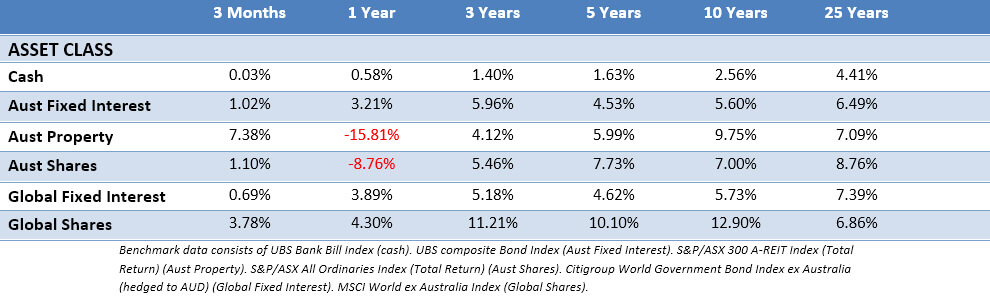
Asset Class Returns

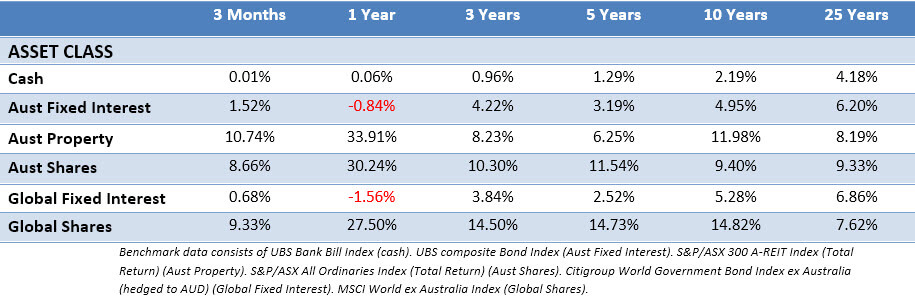
The following outlines the returns across the various asset classes to the 31th March 2018.

It was a mixed first quarter for global equity markets in 2018, with an upsurge in volatility from the very low levels of 2017 a major talking point.

US equities began 2018 strongly, buoyed by ongoing strength in economic data, robust earnings and the confirmation of a major tax reform package. However, the latter part of the quarter saw a marked increase in volatility. Investors first digested the destabilising potential of an elevated US inflation reading and the possibility that the Federal Reserve (Fed) may need to become more proactive in raising interest rates in order to keep upward price pressures under control.

Eurozone equities delivered negative returns in the first quarter, with the bulk of the declines coming in March. Markets began the year on a firmer footing but worries about the path of US interest rates and the outlook for global trade led to declines for the period overall. Sentiment towards UK equities was poor as the FTSE All-Share fell 6.9%. Overseas buyers shunned the market amid ongoing political uncertainty and a weak outlook for economic growth.

After a strong start to the year, Japanese equities followed a similar pattern to other global markets and ended the quarter 4.7% lower. The heightened uncertainty resulted in a stronger yen against major currencies. Corporate results to December 2017 showed very positive trends.

Emerging markets equities registered a positive return in the first quarter, despite a rise in market volatility stemming from tensions over global trade. The MSCI Emerging Markets Index recorded a positive return and outperformed the MSCI World and although Chinese equities were volatile towards the end of the quarter, given rising trade tensions with the US, the market recorded a positive return and outperformed.

Australia was dragged down by its heavyweight banking sector as the potential impact of the Banking Royal Commission began to weigh. In sectoral terms, the other big losers on the Australian market were telecommunications stocks, utilities, REITs and energy.


The China Hustle

If there’s one constant about money, it’s that someone is always wanting to take it from you. As disheartening as that statement is, the quicker investors learn it, and understand who they can and can’t trust, the more secure their financial prospects will become.

Bringing us to the latest financial fraud documentary, The China Hustle.

In the aftermath of the 2008 financial crisis a lot of investors in the US were looking to quickly recoup their losses. At the same time, many Chinese companies were looking to trade on US stock markets, but couldn’t do so directly. Some lower tier US investment banks got involved to help facilitate Chinese companies to list in the US through a backdoor using dormant companies that still had a stock market listing.

Hundreds of Chinese companies found their way onto US markets this way and some big money was being made as share prices surged. Until one US businessman, working in China, decided to investigate a Chinese paper company on behalf of his father who wanted to invest in it.

Orient Paper claimed to be doing $100 million in annual revenue. When the businessman arrived at their factory, he found a run-down operation completely incapable of doing the kind of revenues suggested, nor supporting the company’s market valuation.

It was a complete fraud and many of these Chinese backdoor listings were complete frauds.

And in a story as old as time, the only protection investors had, was the belief in their head that regulators exist to protect them – so no protection at all. The investment banks doing the backdoor listings were also putting buy recommendations on the companies and the unsophisticated individual investor, seduced by potentially high returns, were left holding the bag when the frauds were uncovered.

As one interviewee said, “you’re buying lottery tickets”. And when it comes to individual stocks, Chinese or not, that’s often the case.

In Australia 26 Chinese based companies currently trade on the ASX, only 5 are currently trading above their initial listing price. The ASX has rejected another 21 Chinese companies from listing on the ASX over the past two years.

The China Hustle is available on Netflix.


With thanks to DFA Australia for charts.

This material is provided for information only. No account has been taken of the objectives, financial situation or needs of any particular person or entity. Accordingly, to the extent that this material may constitute general financial product advice, investors should, before acting on the advice, consider the appropriateness of the advice, having regard to the investor’s objectives, financial situation and needs. This is not an offer or recommendation to buy or sell securities or other financial products, nor a solicitation for deposits or other business, whether directly or indirectly.

Filed Under: Uncategorized

March 23, 2018 by John Duncan

Is the 24 Hour News Cycle Important?

Recently the New York Times profiled a man named Erik Hagerman. A former corporate executive, Mr Hagerman is an average man who lives alone in rural United States. So why was the New York Times so interested in him?

Turns out he’s deliberately ignored the news since 8 November 2016 – the day Donald Trump was elected president. As you might imagine, Mr Hagerman is from the left or progressive side of politics and this is a personal response or silent protest against the election of Donald Trump.

While Mr Hagerman’s story has attracted ridicule from Donald Trump supporters, it’s those on his own political side who’ve heaped on the most scorn. The overriding theme being he’s an out of touch fool with no sense of social responsibility.

Yet Mr Hagerman might be on to something. With news constantly available and no more than a swipe away, too much time can be spent agonising over the latest political or financial titbit that we have absolutely no control over.

Does the latest Trump Whitehouse hiring or firing really matter or affect our daily lives? Does the latest market moving Trump tweet really matter? Especially if the inevitable next day clarification by Trump, or a member of his administration, returns markets to their previous place.

Not that it’s just a news blackout, this point in the story notes how he deals with his finances.

As for money, a financial adviser in San Francisco manages his investments. Mr. Hagerman says he throws away the quarterly updates without reviewing them.

No doubt his financial adviser appreciates his client’s lack of interest in the short term returns, but interest or lack of interest, the outcome is the same. Things don’t change just because they’re given more attention. With an investment portfolio in place someone’s future financial destination will always be the same, whether they check that portfolio monthly or every second year.

Looking back on a financial journey, that becomes even more obvious, as the following chart shows.

Had you invested $100,000 into a 30/70 portfolio (30% cash, bonds/70% equities, listed real estate) in March 2006 it would have grown to $204,149 by February 2018. How you felt about your portfolio, investing in general (and your adviser) throughout that timeframe, may have varied though – depending on how often you checked your balance.

The chart shows monthly movements (jagged line) vs biyearly movements (smooth line) in the same portfolio. Imagine both intervals as check-in points by the portfolio owner. The monthly check-in suffers many falls along the journey, while the biyearly check-in is decidedly free of turbulence.

The month on month check-ins reveal a portfolio consistently in the red during 2008/09, when the financial crisis was in full swing. The biyearly wasn’t checked again until 2010, when it was back in positive territory – so nothing to worry about, right?

The message? The happenings of those 12 years are largely irrelevant. No matter how many things the media told us to worry about, or what information we filled our heads with, it wouldn’t have changed the outcome. The end result for this portfolio would always be the same.

Agonising over the minutia? Pointless. We’ve got lives to lead. Take it from our subject.

“I had been paying attention to the news for decades,” Mr. Hagerman said. “And I never did anything with it.”

“I’m emotionally healthier than I’ve ever felt.”

This represents general information only. Before making any financial or investment decisions, we recommend you consult a financial planner to take into account your personal investment objectives, financial situation and individual needs.
Filed Under: Uncategorized

January 25, 2018 by John Duncan

2017 Year in Review

Economic Overview

Once again, the investment strategy of maintaining discipline and holding for the long term won out over reacting to media forecasts and predictions from hyperventilating partisans. In January 2017 CNBC suggested Wall Street was the most bearish they’d been in 12 years, as it turned out, the global economy continued to strengthen as share markets posted solid returns on low volatility.

In Q4, defeats in US Senate contests struck fear into Republicans about 2018 mid-term elections and they quickly agreed to the long talked about Trump tax reform bill. Markets rallied with big tax cuts ahead for corporations. US employment data remained strong, but was distorted by the effects of hurricane season.

As was widely anticipated, the US Federal Reserve lifted interest rates by 25 basis points in December. The Fed also raised its growth forecasts for 2018 to 2.5% from 2.1%.


In the Eurozone, data showed the economy continuing to recover. The unemployment rate fell to 8.8% in October, the lowest rate since January 2009. In October, the European Central Bank announced that quantitative easing would be extended to September 2018 but that the pace of purchases would be reduced from €60 billion per month currently to €30 billion.

Despite a sluggish economy, the Bank of England’s (BoE) monetary policy committee raised interest rates for the first time since November 2007, from a record low of 0.25% back to 0.50%. Annual consumer price index inflation reached 3.1% in November, breaching the BoE’s upper target.

The Bank of Japan’s quarterly Tankan survey recorded the strongest sentiment among large manufacturing companies for more than 11 years. Despite slightly disappointing economic numbers seen in November, virtually all the data released in December exceeded expectations. The Japanese unemployment rate declined to 2.7%, a new low for this cycle, while the number of people employed extended the rising trend seen throughout 2017.

In December, the Reserve Bank of Australia (RBA) said the local economy was growing around its trend rate of 3%, with employment and investment strengthening. Activity was being supported by low interest rates and public investment in infrastructure. The RBA said one continuing source of uncertainty, however, was the outlook for household spending, with income growth slow and household debt levels remaining high.

The Bloomberg Commodities index pushed ahead +4.7% in Q4, underpinned by a rally in industrial metals and energy. Nickel (+22%) and copper (+12%) and iron ore (+12%) posted the strongest gains as Chinese demand remained firm. In the energy sector, Brent crude surged +18.2%, driven by an agreement among OPEC, and non-member countries such as Russia, to extend production cuts throughout 2018.


Market Overview

Asset Class Returns

The following outlines the returns across the various asset classes to the 31st December 2017.

Emerging markets led to gains in global equity markets, their best year since coming out of the global financial crisis. The MSCI Emerging Markets index returned more than 27% over the year, its best performance since 2009. China was one of the top performers, jumping almost 40%.

Developed markets also delivered 20%+ returns for the year. Among the developed markets, using the MSCI World Index (IMI) as a proxy, the overall gain for the year was a bit over 13% in AUD terms. All 23 members posted positive returns, ranging from more than 40% in Austria to just under 3% in Israel.

In the US, the benchmark S&P-500’s near 22% return in local currency terms was its best calendar year since 2013 and placed 2017 in the top third of best performing calendar years in the index’s history. In New Zealand, the NZ50 index registered a sixth consecutive year of gains, hitting record highs.

Australia’s benchmark ASX300 gained over 12% in 2017 on a total return basis. Its sixth consecutive year of gains and bringing it to its highest levels in nearly a decade. The best performing sectors for the year were health care, information technology and energy. Telecommunications services was the only sector with negative returns, although this was heavily impacted by the poor performance of Telstra.

Despite the improvement in the global economy, wage growth and core inflation remained very low in many countries.

THE YEAR IN NEWS

The chart below highlights some of the year’s major news events in context of broad MSCI World Index market performance. These headlines are not offered to explain market returns but to show that investors should view daily events from a longer-term perspective and avoid making investment decisions based solely on the news.

The takeout from 2017, and something that remains consistent every year, is that it makes more sense to employ an investment approach based on diversification and discipline than one based on making predictions and timing markets. The first approach requires only your patience, the second approach requires that you not only accurately forecast future events, but also anticipate how markets will react to those events.


The 2017 Fake News Awards

2017 was the year that truly highlighted the importance of ignoring the media when it comes to your finances. The reaction to Donald Trump being elected President prompted all manner of hysterical forecasts and pearl clutching by those opposing him. Something that also occurred when Barack Obama was elected in late 2008.

To highlight the phenomenon of ‘searching for’ or ‘catering to’ negative Trump stories, the more left leaning MSNBC cable network posted a 50% increase in total viewers during 2017 as they almost wholly focused on Trump, his administration and any calamities or scandals that would titillate those desperate to hear about them. Again, a strategy that worked to boost the viewership of the right leaning Fox News after the election of Barack Obama.

In Trump’s case though, the media interest was almost unprecedented, possibly due to his fame, his behaviour or just because he seemed an anomaly in the political environment. Keenly aware, Trump and the Republican Party obviously wanted to capitalise on the failed forecasts of doom and with their 2017 Fake News Awards.

At number 1 was prominent economist Paul Krugman who, during the immediate downward market plunge in reaction to Trump’s election, said: “It really does look like ‘President Donald Trump’ and markets are plunging… If the question is when markets will recover, a first-pass answer is never.”

Krugman also predicted Trump’s election would bring about “a global recession with no end in sight.”

Krugman is a Nobel Prize Winner in economics and a columnist at the New York Times. His reach is far and wide, so these statements were incredibly irresponsible. In the aftermath of an unrelenting run on US and global equity markets Krugman has now suggested Trump can’t take any credit. This is something that we’re happy to partially agree with, as there was a recovery well underway and investors should always be prepared to look past politics when investing. However, the Trump tax cuts did add fuel to the equity fire.

Yet Krugman was happy to pin an equity market crash upon Trump ahead of time. And if Krugman wants to play that game, Trump’s either responsible or he’s not. He can’t only be responsible for any potential downside. This highlights how irrational things become when partisan politics intersects with financial market returns.

Who knows how many on Krugman’s side of the political spectrum he led astray because they let his forecasts hijack their investment process. Not that this is restricted to one side of politics, there were many who believed the only way to survive the Obama years was through collecting gold and canned food.

During Obama’s term, gold’s returns were dwarfed by US equity returns, while that canned food is now out of date.

In other words, set aside the politics when it comes to money.


With thanks to DFA Australia.

This material is provided for information only. No account has been taken of the objectives, financial situation or needs of any particular person or entity. Accordingly, to the extent that this material may constitute general financial product advice, investors should, before acting on the advice, consider the appropriateness of the advice, having regard to the investor’s objectives, financial situation and needs. This is not an offer or recommendation to buy or sell securities or other financial products, nor a solicitation for deposits or other business, whether directly or indirectly.

Filed Under: Uncategorized

September 1, 2017 by John Duncan

Clear Air is Nice but Don’t Forget the Turbulence

In case you needed a reminder – the sharemarket does go down. It’s worth remembering this in a year which has so far been something of a rarity.

Earlier in the year we highlighted the media and their incessant hectoring about an imminent correction. With nothing much happening in the markets they fell into the need to talk about the potential for something to happen. Gifting generous column space to fund managers and investment talking heads convinced of their relevance.

Six months on and their predicted correction still hasn’t arrived. We’ve even been deprived of any pull back of over 5%.

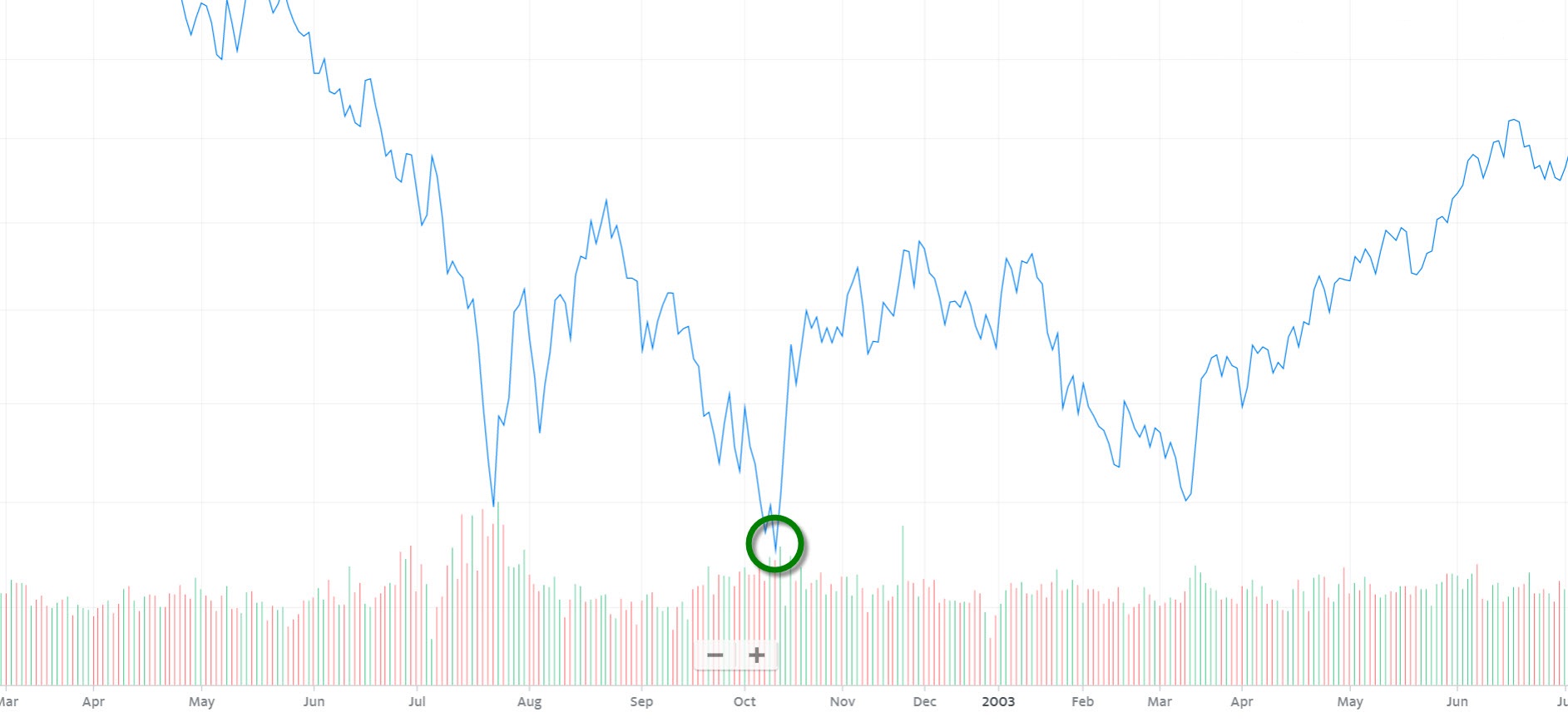
This is the year to date chart of the ASX All Ordinaries. While it still looks choppy, the movements have been within a tight area. After a few minor ups and downs earlier in the year the ASX has been boxed in a 150-point range since mid-May, leaving us currently up 1% for the year.

Best Investment Advice Tasmania

In fact, it’s been a bit of a weird one everywhere. Despite Trump’s tweets and the chubby fellow in North Korea shooting his missiles, volatility has evaporated in many major markets, particularly the US.

To highlight this, between 2007 and 2016 the average annual number of trading days on the S&P 500 with a greater than 1% movement was 77. The highest was 139 days in 2008 during the financial crisis and the equal lowest came in 2013 and 2014 which each had 41 days.

In 2017 there have only been 6 trading days with a movement greater than 1% on the S&P 500.

What does this mean? Nothing, but it’s a new experience for many people because, as shown, financial markets are normally much more volatile than this. For the newer investors, it’s important they don’t get too comfortable with the lack of volatility.

If you like, we could equate investing in equities to flying a plane. If you were a learner pilot you might assume turbulence didn’t exist and your flying hours during 2017 wouldn’t be giving you the best indication of what you might confront in the air.

For the seasoned pilots, you can happily cruise along in the clear air while remembering, despite the patch of calm, turbulence can strike at any time.

It may be next week, next month or next year. No one knows, but understanding it still happens will make an investing journey more palatable. As shown below, the last time we had an intra year decline lower than 5% was back in 2004. As shown right at the end, our biggest pullback this year was 4.7%.

Best Investment Advice Tasmania

It’s not normal, but you can never accuse financial markets of being predictable.

It’s why you need to expect and accept volatility, maintain a diversified portfolio, rebalance that portfolio when appropriate and invest long term in what has consistently offered rewards.

Time tested strategies that make the day to day somewhat irrelevant.

This represents general information only. Before making any financial or investment decisions, we recommend you consult a financial planner to take into account your personal investment objectives, financial situation and individual needs.

Filed Under: Uncategorized

July 28, 2017 by John Duncan

2017 June Quarter Review

Economic Overview

Political uncertainty remained a feature in the June quarter as President Trump dismissed FBI director James Comey and French and UK elections were held. In the EU, risk eventually retreated as the Centrist and Pro-EU candidate Emmanuel Macron won a convincing victory in the French elections.

In the UK things weren’t quite as clear, with the snap election anticipated to strengthen the Conservative majority before Brexit negotiations, ended by eroding their majority. While commentary from Bank of England Governor Mark Carney and his EU peer Mario Draghi appeared to signal the days of stimulus were numbered and tighter monetary policy was ahead.

In the US, the Federal Reserve looked through disappointing inflation figures to increase interest rates by 0.25%, while also detailing plans to reduce its balance sheet. Despite the rate move, the US dollar struggled due to the lack of movement within the Trump administration and other major developed economies signalling tighter monetary policy.

The Bank of Japan offered the most upbeat assessment of the Japanese economy in years which was backed by strong corporate results, however the spectre of North Korea appeared to constrain any euphoria. In the rest of Asia, Chinese data improved during the quarter with Hong Kong following suit, while a new President in South Korea signalled a potentially reinvigorated economy and corporate governance reforms.

Commodities were a drag during the quarter as Brent crude fell 9.3% and iron ore stockpiles built in China. OPEC extended production cuts, but the market was hoping for those cuts to be increased and when this didn’t eventuate the weakness in oil persisted. Meanwhile US oil production continued to rise further tempering oil strength as the US moved into summer driving season.

Back in Australia, the biggest news of the quarter was a $6.2 billion levy on the big four banks and Macquarie Group.

Market Overview

Asset Class Returns
The following outlines the returns across the various asset classes to the 30th June 2017.

Shares in developed and emerging markets delivered strong performances during the quarter, with Australia backing the positive trend. Emerging markets were the star with overall unhedged returns of more than 5.6%, while in developed markets outside Australia the returns were 3.6%.

Australia was alone among developed markets in posting a negative return for the quarter at -1.54%. The Australian market was weighed down by weakness in banking due to the government’s announced bank levy, though telcos, energy, consumer staples and real estate investment trusts also played their part.

Despite the lack of concrete movement on reform in the US, equities continued to push ahead with a strong corporate earnings season. Similarly, in Europe and the UK, corporate earnings helped underpin positive equity returns.

In Asia, China pushed higher on investor optimism following a solid earnings season in blue chip stocks and the landmark decision by index provider MSCI to include Chinese A-Shares in its range of benchmark indices.

Finally, the old whipping boy Greece was the strongest market index as the country reached agreement with Eurozone creditors for the release of an 8.5 billion loan tranche. 


Why Starting an SMSF To Buy Property is a Great Idea

Starting a Self-Managed Super Fund is quite an exciting prospect. No longer will an investor be constrained by the shackles of their tired superfund, an SMSF is an open road with untold freedoms ahead, but how to get started on that road? Luckily there are many eager experts out there ready to liberate investors from the boring returns of their banal old super funds and guide them into the riches of buying property within their SMSF.

Let’s say you and your partner are both in your early fifties, have maybe spent 30 years working and have managed to (between both of you) accrue $250,000 in super.

You may be with an industry super fund, maybe retail, maybe you have a financial planner, but for argument’s sake, let’s say the super fund costs are around 1% per annum or less. Let’s say it’s $2,000 to keep the maths easy. You also have an accountant who charges you $200 to do your taxes each year. Your “net worth” so to speak, to the finance industry is $2,200.

But $2,200 doesn’t feed many hungry mouths. It certainly doesn’t contribute significantly to support an assortment of professionals who can help with your SMSF and find you the perfect property. Nor does it contribute to the black hole of state government coffers or pay thousands in interest to keep bank CEOs happy.

To help all these people out, instead of paying your fees annually you could front load most of them and pay them up front so everyone can benefit now rather than having to wait for you to pay fees each year.

This is why it’s a great idea to set up an SMSF and buy a property.

Take that $250,000 from your super funds and set up an SMSF with your partner, you can then buy a brand new $700,000 apartment with a $500,000 loan (allowing $50,000 for stamp duty and expenses).

Upfront fees. $1,000 to $3,300 to your accountant. Legals? $1,000 to $3,000. Stamp Duty: $30,000 to $40,000 depending upon the state. Bank Valuation and other fees $500-1,500. Sales commissions are officially paid for by the vendor, not you. But all that means is that the sales commissions on your new apartment are embedded in the price. Add another $10,000 to $30,000.

Plus, now you have an annual $2,000 to $3,000 in accountants’ fees. And at 4.5% investor interest rates you are in for $22,500 in interest payments. You’re probably also now paying a financial planner to sign off on your strategy. At 1% that’s another $2,500.

With gross rental yields around 4%, you get income of $28,000 per year. Then you pay strata, insurance, rates, letting fees etc which means you are probably losing a few thousand each year.

Thankfully negative gearing gets you a discount. Oh. That’s right, an SMSF only pays 15% tax, which means there are almost no negative gearing benefits.

So let’s go through the maths:

Leaving your $250,000 in your boring old super fund:

Creating an SMSF to buy a $700,000 property:

Sure, you will wipe out close to 25% of your entire savings in upfront fees alone. And your annual fees are at least double what they were, maybe triple. But just look at the list of people who will benefit from your new SMSF: accountants, lawyers, governments, real estate agents and banks.

That’s a lot of marketing and lobbying power – to convince you to put your super into property via an SMSF, and to lobby the government to keep the changes that allow you to borrow in your SMSF despite ongoing warnings and objections from independent observers.

So you can see now see why setting up an SMSF to buy property is such a great idea

Well maybe not for you, but for everyone else in the game it makes perfect sense!
Credit: macrobusiness.com.au


With thanks to DFA Australia.

This material is provided for information only. No account has been taken of the objectives, financial situation or needs of any particular person or entity. Accordingly, to the extent that this material may constitute general financial product advice, investors should, before acting on the advice, consider the appropriateness of the advice, having regard to the investor’s objectives, financial situation and needs. This is not an offer or recommendation to buy or sell securities or other financial products, nor a solicitation for deposits or other business, whether directly or indirectly.

Filed Under: Uncategorized

May 12, 2017 by John Duncan

Ready for a Stock Tip

Read any good stock tips on the internet lately? If you listen to our advice, hopefully not!

We’ve long pointed out the dangers of buying individual companies because of a lack of diversification and heightened risk, among other reasons. Now there’s another confirmed danger for anyone getting stock tips from internet sites and online newsletters – the tip writer may be a paid spruiker.

Last month the US Securities and Exchange Commission filed fraud charges against 27 individuals and entities that were engaging in paid stock promotion without disclosing that fact.

Essentially a listed company would hire a stock promotor or communications firm to generate publicity for their stock – with the end intention of increasing the price. Those hired would write overly positive articles about the company and have them published as reasoned analysis on various community based investment sites like Seeking Alpha. However, some managed to find their way onto more recognisable sites like Forbes.

Now to understand the duplicity at play here, one person was found to be operating under nine different pseudonyms. Why? It’s psychological. One person positive on a company is nothing compared to nine people saying a company’s share price is about to hit the roof. The guilty party also gave those nine people backstories to increase their authenticity, claiming one was “an analyst and fund manager with almost 20 years of investment experience.”

A timely reminder that on the internet anyone can be a lawyer, doctor, fund manager or commercial airline pilot – or all those people at once!

How does this relate to Australia?

Australia doesn’t have a shortage of stock promotion websites or email tip sheets. It also has a prominent stock trading forum that is listed on the ASX. All are geared to the spec end of the market.

The stock promotion websites while clearly not transparent, are obvious in their intent – they wouldn’t exist without companies paying for promotion. Why? If a company’s share price is pushed higher they can raise capital at more favourable terms.

The stock trading forum, while great entertainment, is wholly anonymous with administrators unable to deal with the one person acting as nine problem. In the age of VPNs or Virtual Private Networks the same person can sign into 9 different accounts from nine different locations without arousing suspicion of the website administrators. Again, the intent is to whip other less aware users into a frenzy to buy shares they own so the price rises and they sell with a profit – it’s called a pump and dump.

While we’ve long pointed out the folly of stock pickers because they can’t predict the future, at the bottom end of the market they can become self-fulfilling. With smaller market caps the email tip sheets and membership websites have the ability to move shareprices on their own.

This is the 2017 shareprice chart of a small resources company listed on the ASX.

At the start of the year a tip sheet put a buy recommendation on the company. This was after the price of metal the company was looking to mine had steadily increased in price during the second half of 2016. Even better, in the first two months of 2017 the metal price increased over 50% as shown below. The company’s shareprice moved upward with the metal price.

But by the end of February the tip sheet gave the call to sell, saying the metal was overvalued and it was time to take profits. As seen by the two charts, the metal price is slightly ahead of where it was at the end of February, while the company’s share price lost more than 50% of its value and is back below where it was tipped as a buy.

It doesn’t take a cynic to believe those behind the recommendations bought and sold the company’s shares before making the same recommendations to their membership base. And the 23% fall in the share price and highest trading volume of the year following their sell call was clearly triggered by their membership base selling.

Little has changed with the company, but emotion can breed contagion. Other shareholders unaware of why the shareprice was falling likely became spooked and sold out themselves. Driving the shareprice even lower.

What’s the takeaway here? Individual shares are always risky. While promoted shares and recommendations on shares are doubly risky. You never know who is behind them and what their intentions are.

It’s why a portfolio should be invested across multiple funds, asset classes and jurisdictions. No one can pump and dump a diversified portfolio.

This represents general information only. Before making any financial or investment decisions, we recommend you consult a financial planner to take into account your personal investment objectives, financial situation and individual needs.

Filed Under: Uncategorized

May 5, 2017 by John Duncan

2017 March Quarter Review

Economic Overview

Global policy makers expressed a cautious welcome for continuing signs of improving activity during the March quarter. The Reserve Bank of Australia noted a pick-up in global trade and industrial production, alongside a tightening of labour markets.

In the US, economic data continued to be supportive. Non-farm payrolls were robust and activity indicators buoyant. Manufacturing purchasing managers’ index (PMI) increased and the consumer confidence index rose to its highest level in 16 years.

Reflecting the improving outlook for growth and inflation the Federal Reserve increased rates by 0.25% in March. Optimism over Donald Trump’s plans to cut taxes, boost infrastructure and reduce the regulatory burden, however, the failure to pass changes to healthcare legislation raised doubts over Trump’s ability to implement some of his policies.

In the Eurozone, the period started on a weak note, with negative returns in January, but sharemarkets picked up as the quarter progressed. Economic data released during the period was largely positive. Leading indicators showed gains with the flash composite purchasing managers’ index reaching a near six- year high of 56.7 in March. Inflation, as measured by the consumer price index, picked up to 2.0% in February, albeit slipping back to 1.5% in March.

The Bank of England upgraded its 2017 UK GDP growth projection (from 1.4% to 2.0%) due to stronger-than-expected consumer spending following the “leave” decision in the EU referendum.

After weakening at the end of 2016, the Japanese yen appreciated gradually in the past three months. From Japan’s perspective, the main political event was the meeting between Prime Minister Abe and President Trump which was surprisingly cordial despite the previous US rhetoric around trade and Japan’s foreign exchange policy.

In China, better-than-expected data and a stabilizing yuan led to improved sentiment among investors. Ongoing restrictions on the property market and a tightening on capital outflows also saw liquidity diverted into equities.

Energy was a commodity laggard. Crude oil fell 6% over the quarter amid doubts over the sustainability of an OPEC-led output deal. Oil producers Norway and Russia were the worst performing developed and emerging markets respectively.

Market Overview

Asset Class Returns
The following outlines the returns across the various asset classes to the 31th March 2017.

Global equity markets delivered mostly positive returns, led by emerging markets. The Australian market was a top performer, with healthcare companies being a standout with consumer staples following. However, a stronger Australian dollar trimmed gains from other developed markets for unhedged investors.

US equities performed well as the S&P 500 advanced 6.1%, Information technology was the top-performing sector, followed by consumer discretionary and healthcare.

The quarterly earnings season was a positive one for European equities, with many firms reporting double digit earnings growth and confident outlooks for 2017. The information technology sector was the top performer, followed by utilities and industrials.

The Japanese sharemarket traded in a tight range throughout the quarter, registering a total return of just 0.6%. In China, stocks gained strongly and had their best first quarter in over 10 years, driven on by continued positive news for the world’s second-largest economy.

The emerging markets posted strong gains, with US dollar weakness providing a tailwind for returns. Real Estate Investment Trusts experienced negative returns for a second consecutive quarter, although this came after several years of strong gains.

Buffett’s Bet Poised to Pay Off

Midway through the quarter Warren Buffett released Berkshire Hathaway’s annual letter to shareholders. Most notable was Buffett highlighting his now million-dollar charitable bet with an asset manager that no investment pro could select at least five hedge funds to keep pace with an S&P 500 index fund over ten years.

Buffett publicly offered the wager back in 2006. However, in an industry where active managers base their performance on beating indices such as S&P 500, only one man, Ted Seides of Protégé Partners, stepped up to take Buffett’s challenge.

Seides picked five funds (which would not be publicly disclosed) and their performance would be averaged and then compared against Buffett’s choice of Vanguard’s S&P 500 index fund.

After nine years the results haven’t been good for the hedge funds.

The average return of the hedge funds over the past nine years was 2.2% per annum meaning $1 million invested would have gained $220,000. In contrast the inexpensive index fund Buffett chose returned 7.1% pa, which is a ballpark return for US or Australian sharemarkets over longer periods of time. The gain on $1 million invested would have been $854,000.

You’ll note, if this performance is consistent in the final year of the bet, Buffett’s investment will double in ten years, while the hedge funds will have just kept ahead of US inflation.

Buffett said of the hedge fund managers:

I’m certain that in almost all cases the managers at both levels were honest and intelligent people. But the results for their investors were dismal – really dismal. And, alas, the huge fixed fees charged by all of the funds and funds-of-funds involved – fees that were totally unwarranted by performance – were such that their managers were showered with compensation over the nine years that have passed.

And he noted why it’s hard to find a successful active manager who will be worth their fees:

Further complicating the search for the rare high-fee manager who is worth his or her pay is the fact that some investment professionals, just as some amateurs, will be lucky over short periods. If 1,000 managers make a market prediction at the beginning of a year, it’s very likely that the calls of at least one will be correct for nine consecutive years. Of course, 1,000 monkeys would be just as likely to produce a seemingly all-wise prophet. But there would remain a difference: The lucky monkey would not find people standing in line to invest with him.

We would note if it came down to a monkey or an active investment manager, there’s no guarantee of exceptional performance from either, but the monkey’s fees will be much more reasonable.


With thanks to DFA Australia.

This material is provided for information only. No account has been taken of the objectives, financial situation or needs of any particular person or entity. Accordingly, to the extent that this material may constitute general financial product advice, investors should, before acting on the advice, consider the appropriateness of the advice, having regard to the investor’s objectives, financial situation and needs. This is not an offer or recommendation to buy or sell securities or other financial products, nor a solicitation for deposits or other business, whether directly or indirectly.

Filed Under: Uncategorized

January 24, 2017 by John Duncan

2016 A Year In Review

Economic Overview

The dangers of basing investment strategies on media forecasts were highlighted dramatically in 2016 as the outcome of major world events and the market reaction to them confounded pundits.

The major news event was Donald Trump’s US presidential election win. The Republican outsider defeated Democrat Hilary Clinton on a platform that tapped into voter anger at “insider” politics and the effects of globalisation.

Similar sentiments also fuelled the mid-year vote by Britons to leave the European Union, again a largely unheralded result that led to the resignation of Conservative Prime Minister David Cameron.

Despite these potentially destabilising events, equity markets rallied through the second half of the year – the UK FTSE-100 index reaching record highs in October and the major US indices hitting a succession of historic highs later in the year. This was a stark contrast from January & February when the focus was on China’s economy and bottom dwelling oil and commodity prices.

The steady US economic recovery, falling jobless rate and uncertainty over the Trump administration’s policies were cited by the US Federal Reserve in December when it raised its benchmark interest rate after a year-long pause.

GDP growth in China, meanwhile, hit a 25-year low of 6.7%. The government supported the economy with spending on infrastructure, though international bodies such as the IMF and OECD expressed concern at rising levels of debt.

Growth in the EU area also remained subdued, despite continuing accommodative monetary policy. The European Central Bank expressed concern about potential knock-on effects of Brexit to the EU and of the Trump presidency to populist movements in Europe.

In Australia, the hangover from the end of the mining investment boom lingered. In only the fourth such occurrence since the 1991 recession GDP shrank in the September quarter as businesses, consumers and government all cut spending.

The RBA cut interest rates twice in 2016, but also expressed concern at the effect of low rates on housing prices and household debt. Banks were urged to strengthen lending standards.

Market Overview

Asset Class Returns
The following outlines the returns across the various asset classes to the 31th December 2016.

After the January rout, share market sentiment began to shift from mid-February and bar a brief sell-off after the UK vote in late June, the overall trend was higher. Global GDP growth slowly picked up, while commodities bounced as supply eased and investment pulled back.

Internationally, the US equity market was one of the best performers over the year, alongside those of commodity producing economies such as Canada and Norway. Energy and materials sectors were among the top gainers.

A similar pattern was evident in emerging markets, with energy and materials topping annual sector tables and commodity producers such as Russia (oil) and Brazil (iron ore) the best performing countries. India and China were largely flat over the year.

Locally, the Australian and New Zealand share markets were among the best performers in the developed world. The Australian market rose by nearly 12%, led by resource stocks. The NZ market hit record highs in August, before retracing, though ended up nearly 9% over the year, its seventh annual gain in eight years.

Value stocks were strong performers on the Australian market, while there was a more modest premium from small cap stocks over the year. Australian and international fixed interest finished stronger over the year, although both were punished in the final quarter as US Treasuries sold off after the Trump victory.

THE YEAR IN NEWS
The chart below highlights some of the year’s major news events in context of broad Australian market performance. These headlines are not offered to explain market returns but to show that investors should view daily events from a longer-term perspective and avoid making investment decisions based solely on the news.

The performance of markets in 2016 underscored once again the dangers of basing one’s investment strategy on the news cycle or of acting on opinions and forecasts of media and market pundits. It also highlighted the importance of investors diversifying across different assets and different countries, while staying disciplined within the plan designed for them.


The Australian’s Top Picks

Every December The Australian newspaper has an end of year feature offering its top 100 financial picks for the year ahead. They generally comprise shares, managed funds, mortgages, credit cards and other financial products.

For the past three years, we’ve followed the share picking section of the list with interest – knowing that for the most part, while they will have some success, share pickers usually fail to beat the market, especially over the long term.

In 2013 The Australian’s 66 share picks offered 31 winners and 35 losers, they combined to provide a 8.86% loss. The wider ASX (price only) returned 14.76%.

In 2014 The Australian’s 65 share picks offered 22 winners and 42 losers and 1 neutral return, they combined to provide an 8.21% loss. The wider ASX (po) returned 0.66%

In 2015 The Australian’s 53 offered 20 winners and 33 losers, however they combined to provide a 13% return – an anomaly that came down to the 724% return of Bellamy’s Organic. We know how that winner eventually turned out – one of the bigger disasters of 2016. The wider ASX (po) returned a 0.82% loss.

In 2016 The Australian hit one out of the park – 35 winners and 25 losers for an overall return of 20.67% against the wider ASX (po) return of 7.01%.

On the surface the share pickers vs the market now looks to be a 50/50 proposition after four years, even if The Australian’s losers outnumber the winners, but if we compare the full returns across those 4 years it becomes a different story.

The ASX (price only) has an average annual return of 5.40% against the 4.15% from The Australian’s picks. And if you started with $10,000, the market would be on $12,260 vs $11,406 for The Australian.

But while picking shares is a common thing, few people invest solely in the ASX index. They do invest in diversified portfolios though. Adding an actual portfolio into the mix makes this comparison more realistic.

In this instance, we’ll add a portfolio with 70% growth assets (local, international shares and listed real estate) and 30% defensive assets (local, international fixed interest and cash).

As you can see the difference is stark. A diversified portfolio has delivered an 11.52% annual return since 2013 and grown to $15,407. The Australian trails both the portfolio and the ASX. Not only is the portfolio more diversified, it’s enjoyed the benefits of higher returns from international shares, fixed interest and listed real estate to improve its return.

While we’re happy to congratulate The Australian on their past two years, their outperformance can be attributed to one company’s performance in 2015 and two companies in 2016. Does that sound like good judgement or good luck?

The diversified portfolio’s return can be attributed to thousands of companies, bond funds and real estate trusts spread throughout many of the world’s economies.

What would you rather be relying on?


With thanks to DFA Australia.
This material is provided for information only. No account has been taken of the objectives, financial situation or needs of any particular person or entity. Accordingly, to the extent that this material may constitute general financial product advice, investors should, before acting on the advice, consider the appropriateness of the advice, having regard to the investor’s objectives, financial situation and needs. This is not an offer or recommendation to buy or sell securities or other financial products, nor a solicitation for deposits or other business, whether directly or indirectly.

Filed Under: Uncategorized

November 10, 2016 by John Duncan

The Apprentice – White House Edition


whitehouseapprentice

Well here we are again. After the Brexit vote earlier in the year we’ve again witnessed a public vote having a real-time impact on financial markets. The US voting to elect Donald Trump as President.

Markets spent the last week before the election reacting to polling numbers. Firstly, there was a sell off when Trump moved back into contention, but in the final two days a surge to Clinton pushed up equities, commodities and the Australian dollar.

When reality set in, markets around the world tumbled. The initial fallout in US market futures was slightly worse than during the Brexit vote, but that’s to be expected given the vote wasn’t on the periphery of the US, it was the US – the world’s largest economy.

Trump taking the lead during the vote count proceeded to knock more than 5% off the S&P 500 futures in the space of four hours, with the ASX falling in sympathy. However, 16 hours later, with Trump as the President-elect, the S&P 500 was higher than it was when a Clinton victory seemed assured.

This market whiplash once again underlines why we continue to preach the gospel of staying disciplined when investing – never make a short-term decision about a long-term portfolio.

When something unexpected like this happens it’s always best to ignore your investments. Markets always gyrate when a shock comes. It may be for hours, days or maybe weeks. Never buy into a boom, never sell into a storm. If you have a balanced portfolio then your bonds will soar as your stocks fall, mitigating the impact.

So why the sell off and why the turnaround?

As we said after Brexit – financial markets love certainty and they hate uncertainty. Clinton was certain and Trump was not which explains part of it, but the selloff also appears to signal gamblers at play.

The financial market surge before the election likely signalled many people were gambling on Clinton being a sure thing. When it went the wrong way, the selloff started as they looked to unwind their positions before they would be seriously in the red.

The recovery was set when Trump took to the stage to claim victory in a calm and measured manner. No longer was anyone being locked up, “we owe this woman”, Trump said, “our deep gratitude. She has worked so hard for our nation.”

Not that markets care about Clinton, but Trump soothed fears that the world was ending and enemies would be hunted. He started to speak like a politician. Markets like that.

They then digested the possibility of investment stimulus and tax cuts. They liked those too.

Finally, remember this: the media pundits and columnists who were wrong about everything for the past two years, will be the same ones lining up to tell you what they think will happen next.

Ignore them. The only certainty from here is uncertainty.

Same as always.

Filed Under: Uncategorized

June 27, 2016 by John Duncan

Brexit Vote Reaction – Don’t React

On Friday we witnessed a significant event and its real time impact on financial markets. Britain voting to leave the European Union.

Despite a final week “Remain” rally that pushed up equities, commodities and the Australian dollar, someone was clearly reading the tea leaves the wrong way.Financial markets love certainty (Remain) while they hate uncertainty (Exit) and they certainly hate this outcome. However, this is just another bump (or dip) in the investing journey that will likely look remarkably benign when we look back on it in the years to come.

This decade, still living with the lingering aftereffects of the Global Financial Crisis, has seen several market shaking events. The Japanese Earthquake and Tsunami rocked world markets in 2011, while markets were less than overjoyed when the US had its AAA rating clipped by S&P later that year.

And just when investors have started to feel comfortable this decade, ongoing fears about China and Greece would rear their heads to unleash waves of volatility.

But… where was the worst place to be invested?

The old “safe haven” of cash of course.

Here’s $1 invested into the various asset classes from January 2010 until May 2016:

GOW1016

There are some rough moments in there, but Australian listed property leads the way with an annualised 13.60% return, while cash has returned investors an annualised 3.50%. Australian shares have managed an annualised 6.23% and International shares an annualised 11.91%. Anyone ignoring all the market shaking events along the way has inevitably done better than someone who kept themselves safe in cash.

Back to the Brexit.

There’s inevitably more uncertainty to come, but there are some things that are certain.

One thing not mentioned – the referendum isn’t legally binding in any way. The next step will be parliamentary politics. We’ll take up that part of the story from The Financial Times

The UK government could seek to ignore such a vote; to explain it away and characterise it in terms that it has no credibility or binding effect (low turnout may be such an excuse). Or they could say it is now a matter for parliament, and then endeavour to win the parliamentary vote. Or ministers could try to re-negotiate another deal and put that to another referendum. There is, after all, a tradition of EU member states repeating referendums on EU-related matters until voters eventually vote the “right” way.

Despite the celebrations and glum faces we’ll see in the media, Britain can’t just leave the EU tomorrow. The Lisbon Treaty demands a negotiating period with the European Council of up to two years.

Fortunately for markets and unfortunately for the exit voters that’s plenty of time for all manner of goodies and interventions to possibly convince the UK to stay… let’s wait and see..

This represents general information only. Before making any financial or investment decisions, we recommend you consult a financial planner to take into account your personal investment objectives, financial situation and individual needs.
Filed Under: Uncategorized

  • « Previous Page
  • 1
  • 2
  • 3
  • Next Page »

Keep up to Date

Powered by VMA-Emailer

Meet John Duncan

John Duncan - Financial Planner

Director for True Financial - John Duncan - Fee Only financial planner To receive the best financial planning advice you need the best financial planner. John Duncan is certainly in that category. John is a financial planner who is unique in not only his high level of knowledge and experience in financial planning but also in the amount of areas that John advises in. A Financial Planner with a strong Education background John is a Certified … Read More

Post Categories

  • Budget (5)
  • General (25)
  • Insurance (2)
  • Investment (13)
  • Property (5)
  • Superannuation (4)
  • Tax Tips (7)
  • Uncategorized (30)

Like us on Facebook

Recent Posts

  • December 2019 Quarterly Review
  • A Shock from The Electric Car Revolution
  • Media Omission & the Market
  • Convictions Are Great Until They Aren’t
  • True Grit

Privacy Statement

See our Privacy Statement here

Keep up to Date

Powered by VMA-Emailer

True Financial is an Authorised Representative No. 428771 and Credit Representative No. 428873 of FYG Planners Pty Ltd, AFSL/ACL No. 224543. ABN 29 009 541 253

Contact Information: Address: 23 Errard St Kelvin Grove 4059 - Phone: (07) 3169 2570 - Email: admin@truefinancial.com.au - Web Design & SEO by: Visual Marketing

Information provided on this website is general in nature and does not constitute financial advice. True Financial Pty Ltd will endeavour to update the website as needed. However, information can change without notice and True Financial Pty Ltd does not guarantee the accuracy of information on the website, including information provided by third parties, at any particular time. Every effort has been made to ensure that the information provided is accurate. Individuals must not rely on this information to make a financial or investment decision. Before making any decision, we recommend you consult a financial planner to take into account your particular investment objectives, financial situation and individual needs.True Financial Pty Ltd does not give any warranty as to the accuracy, reliability or completeness of information which is contained in this website. Except insofar as any liability under statute cannot be excluded, True Financial Pty Ltd, its employees do not accept any liability for any error or omission on this web site or for any resulting loss or damage suffered by the recipient or any other person. Unless otherwise specified, copyright of information provided on this website is owned by True Financial Pty Ltd. You may not alter or modify this information in any way, including the removal of this copyright notice.